Showing posts with label seafood. Show all posts

Thursday, March 10, 2011

Asian Fusion Weekend

This past weekend witnessed a host of continual successes in my kitchen. It seems that everything we made, be they desserts, breakfast, or actual main courses, ended up perfect. In addition to this excellence, it appears that we also had an unplanned theme of vaguely pan-Asian-ish flavours in our dinners. That probably had something to do with the abundance of teriyaki and soy sauce in use. Y'know, just maybe. In any case, both these dishes do a wonderful job of pairing distinct sweet and sour flavours together. They were such an unexpected treat, I can't help but blog about them.


Saturday: Teriyaki-Glazed Salmon Fillets
I don't eat enough fish in my life. This is because a) as a scuba dive instructor, I find it somewhat odd to eat my little aquatic friends, and more saliently, b) the price tag of fish in the Midwest doesn't like me. But when you get a craving, there's no fighting it. I needs me some fishies. So, bolstered by the earlier success of revisiting old cookbooks, I took another leap of faith and started examining the fish section ATK's 2009 Cooking for Two. I don't rely on this one much, because "for Two" doesn't generate sufficient leftovers in my opinion. The food is good, though, so there's no sense in completely ignoring it.

This dish stood out from the rest in the section. It involves pan-searing salmon until it's almost crisp, and then covering it in a thick, viscous glaze of homemade teriyaki sauce (because bottled just isn't good enough). What's more, the recipe leads you to serve it on a bed of simple cabbage-shiitake stir-fry. Though I would add more mushrooms next time, this is a quick way to add both the crunch of veggies and the je-ne-sais-quoi of shrooms to the already sweet-salty tang of the fish. Talk about rich in taste and texture! ATK FTW. And simple enough that even I might decide to assemble it on a weeknight. When I can afford salmon on a regular basis. Yeeaaah...

  • 1/4 cup soy sauce
  • 1/4 cup sugar
  • 1 Tbs mirin
  • 1 tsp cornstarch
  • 2 scallions, sliced thin
  • 2 garlic cloves, minced
  • 1 tsp sesame oil
  • 1/2 tsp grated or minced fresh ginger
  • 4 tsp vegetable oil
  • 6 oz shiitake mushrooms, stemmed and sliced 1/4 inch thick
  • 1/2 small head napa cabbage (about 8oz), cored and cut into 1-inch pieces (about 4 cups)
  • salt and pepper
  • 2 (6oz) skinless center-cut salmon fillets, about 1,1/2 inches thick

Adjust an oven rack to the middle position and heat the oven to 200 degrees. Whisk the soy sauce, sugar, mirin, and cornstarch together in a small bowl. In a separate bowl, combine the scallions, garlic, sesame oil, and ginger.

Heat 1 Tbs of the vegetable oil in a 12-inch nonstick skillet over medium-high heat until shimmering. Add the mushrooms and cook until they soften and just begin to brown, about 2min. Stir in the cabbage and cook until wilted, about 5min.

Clear the center of the skillet, add the scallion mixture, and cook, mashing the mixture into the pan, until fragrant, about 30sec. Stir the scallion mixture into the vegetables. Season with salt and pepper to taste, and transfer the mixture to a platter. Tent loosely with foil and keep warm in the oven while preparing the salmon.

Pat the salmon dry with paper towels and season with salt and pepper. Wipe out the skillet with a wad of paper towels, add the remaining 1 tsp oil, and heat over medium-high heat until just smoking. Place the salmon, skinned-side up, in the skillet and cook until well browned on the first side, about 5min. Flip the fish and continue to cook until the flesh is opaque and flakes apart when gently prodded with a paring knife, 3-5min longer. Transfer the fish to the platter with the cabbage in the oven while preparing the sauce.

Wipe out the skillet with a wad of paper towels. Whisk the soy sauce mixture to recombine, add it to the skillet, and bring to a simmer over medium ehat. Cook until the sauce is a thick, syrupy glaze, about 2min. Spoon the glaze over the salmon and serve.


Sunday: Honey-Chile Chicken Wings
This recipe has been on my waiting queue for a while: Moxie and I had been planning to wait until the local farmer's market reopens to purchase quality meat. Unfortunately, we've both been suffering from meat-cravings recently, so we caved and bought the best free-range chicken the supermarket could provide (which isn't so much "happy" chicken as "vaguely content"). But man, does it hit the spot.

My first reaction to biting into the finished product was: "...buffalo wings?" Because indeed, they are similar to the restaurant appetizer that Do wants to order by the bucketful whenever he comes to visit. They have the same crispy skin and juicy interior; both are doused in sauce; finally, eating them with your hands makes a tasty mess that will leave you licking your fingers for hours. The sauce itself is what makes all the difference; I'm sure you can imagine the depths of taste in the combination of vinegar, honey, and soy sauce. Adjust the spice content to match your heat tolerance (Do, for instance, would triple the amount of crushed red pepper, and then add some hot sauce), and you can add the right amount of burn to the sticky sweet & salty mixture.

  • 4 lbs chicken wings // You don't need that much; we used less than 3 lb
  • 1/4 cup olive oil
  • salt and pepper
  • 1/4 cup rice vinegar
  • 1 tsp crushed red pepper
  • 1/2 cup honey
  • 2 Tbs soy sauce
  • 2 scallions, thinly sliced

Preheat the broiler and set a rack in the center of the oven. In a large bowl, toss the chicken wings with the olive oil and season with salt and pepper. Arrange the wings on a wire rack set over a large, sturdy baking sheet. Broil for 45-50min, turning once or twice, until the wings are cooked through and crisp.

Meanwhile, in a small saucepan, combine the vinegar and crushed red pepper and simmer for 1min. Let cool, then whisk in the honey and soy sauce.

In a large bowl, carefully toss the chicken wings with the honey-soy mixture. Transfer the wings to a platter, sprinkle with the scallions and serve.

Thursday, November 4, 2010

This meal brought to you by Forward Momentum

I guess I was remiss when last when writing about the Great Tapas Dinner. I didn't even mention the amount of prep work that went into it. Don't worry, I won't wax poetical about the last minute stress of hosting a dinner party. I'm sure we've all been there before. The fact that this gathering involved me planning to single-handedly put together 21 different dishes, well... that just illustrates how I have way too much fun for my own good.

To quote a militaristic literary idol of mine, no battle plan survives first contact with the enemy. Just so in this case. I plotted out the menu way in advance (which just means I didn't say: "Oh, this looks interesting; let's make this tonight!"). Having no real idea where to start, I simply paged through the The Book of Tapas, noting which recipes looked tasty or interesting (or just bizarre and intriguing). Unfortunately, this gave me a list with roughly 50 items on it. After several cuts, and one dessert addition from Rick Bayless' website, I had the expected 21.

You would think that would be sufficient planning. But no! Then I had to figure out if it was even possible to make those dishes: many called for seasonal ingredients that aren't always easy to find in a Midwestern Autumn. Which brings me to the first great obstacle: grocery shopping. (Here I must apologize, because I said I wouldn't wax poetical. The shopping deserves an exception.) My memory is hazy (stress-induced delirium?), but I believe I had to make four distinct trips to the store. The first was to determine if all the ingredients could be had, and if not, what I could use instead. That was a success.

The second and third trips, as the actual 'buy stuff' excursions, were not. You see, I don't have a vehicle -- which is usually fine, because I live within walking distance of two grocery stores. However there is a limit to how much a person can carry in one trip. This was made even more difficult because two of my roommates promise to help carry bags... and then both flaked out on me. I must have been quite a comical sight, carrying all that stuff back by myself. Ok, rant over. Those were trips 2 and 3. Trip 4 was the last minute shoot-where-is-the-x-oh-damn-quick-go-get-it-now trip.

And that was all before the day of the event. During the week preceding the dinner, I pretty much spent every night reviewing the recipes (to ensure I'd be able to construct them with a minimum of difficulty), sometimes almost falling asleep on the cookbook. It was actually pretty funny. By the end of the week, I was virtually dreaming of tapas. I was definitely reverting to Spanish whenever I started talking to anyone. Aaawkward.

And by the end of it, I didn't even get to serve everything! While actually in the kitchen, I had to spontaneously remove 4-5 courses from the meal. The cuts were bourne of a realisation that there was no way my guests were going to be able to eat so much. Hey! In my defense, tapas are supposed to be small!

Anyway, that's enough blabber and ranting from me. Let's get to the interesting stuff: the food! These two dishes fall under the 'curiosities' category. Definitely not something you would serve every day, but an intriguing combination regardless. On the whole, this is the type of food on whose taste you might reflect, but it won't cause any cravings. They fit in well in a large complicated meal, and might work better as a small Amuse-Bouche.

Orange, Fennel, and Onion Salad (Ensalada con Naranja, Hinojo y Cebolla)
  • 1lb 5oz fennel, peeled and cut in half lengthwise
  • 3 large oranges
  • 5 Tbs olive oil
  • 2 Tbs lemon juice
  • 1 small onion, thinly sliced
  • handful of black olives, pitted and sliced
  • mint leaves, to garnish (optional)
  • salt and pepper
Bring a pan of salted water to a boil. Add the fennel, being back to a boil and cook for 2 minutes, then drain. Peel the oranges, removing any traces of white pith, and thinly slice crosswise, reserving any juices. when the fennel is cool enough to handle, thickly slice it and set aside. To make the dressing, beat the olive oil, lemmon juice and reserved orange juice together in a large bowl with a fork. Season with salt and pepper.

Combine the fennel, oranges, onion and olives in the bowl, gently tossing together. Pour the dressing over the salad and toss gently just before serving. The salad can be garnished with mint leaves, if desired


Hard-boiled Eggs with Smoked Salmon (Huevos duros al Salmón)
  • 4 eggs
  • 1/2 cup mayonnaise
  • 1 generous slice smoked salmon
  • salt
  • 3,1/2 Tbs bottled salmon row, drained, to garnish
To hard boil the eggs, pour enough water to cover them into a large pan, add 1 tablespoon salt and bring to a boil. Add the eggs carefully and stir gently with a wooden spoon to that then they set the yolks will be in the center. Cook medium-size eggs for 12 minutes. (Add 1 minute for bigger eggs and subtrract 1 minute for smaller eggs.) Drain off the hot water, fill the pan with cold water and leave the eggs until required. When the eggs are cool enough to handle, shell and halve the eggs lengthwise. Cut a thin slice off the base of each egg white half so it stays upright.

Put the mayonnaise and smoked salmon in a blender and blend until well mixed. Season with salt, if necessary, as the salmon might be already salted. To improve the presentation of the eggs, use a pastry bag to pipe the salmon and mayonnaise mixture onto the halved eggs. Garnish with the salmon roe and serve. If no serving immediately, store in the refrigerator until required.

Sunday, February 7, 2010

Homemade Parmesan Polenta with Shrimp, Pancetta, and Chard topping

So to celebrate Do passing his PhD exams (yes! He passed!), we spent this past weekend in Santa Cruz. Four blocks from the beach, in a 1929 Victorian house that had 5 bedrooms, 30 stained glass windows, and a giant box of Playboys hidden in the attic. I mean, there was stained glass in the stairway, stained glass in the bathrooms, stained glass on the kitchen ceiling. Not kidding. And if all that weren't deliciously random enough, we were there with a college friend we hadn't seen since 2005, my cousin, his wife, his wife's sister + beau, and five other people whom Do & I had never even heard of before we all arrived Friday night. We drove up, made introductions, and promptly began exploring all the nooks and crannies of the crazy house and giggling over the epic quantity of board games we had all brought down. It was that kind of weekend.

By the way, if you're ever in Santa Cruz, the best coffeeshop in the entire Western Hemisphere is called The Abbey. It's this renovated space behind a brick church with huge, comfy, retro couches, funky art, and some of the best coffee drinks I've had anywhere. Do & I happily spent Saturday afternoon there reading and discussing the late 20th century bureaucratization of science research. Very us.

So we read books on the beach. We ate seafood at every possible opportunity. We visited the Monterey Bay Aquarium (just as awesome as everybody claims -- Do remembered almost nothing from when he visited about 15 years ago, until we got to the ray touch pool. You get to pet Rays! Apparently that made a big impression on him back in the day. They feel like velvet, BTW.). It was a very ocean-themed weekend.

We didn't do much cooking during the weekend, partly because we were so busy running around having a good time and partly because cooking for 12 people whom you don't really know is complicated. However, at our last supper club get-together, we had a massive success with a new seafood-themed recipe: an Italian take on southern Shrimp & Grits. Massive Success.

I don't really cook with polenta or shrimp. The former is too often just a swanky cardboard-tasting filler, and the latter is a bitch to clean and/or tastes like rubber when pre-frozen. But this recipe... oh, man. Like most top-quality homemade Italian food, this recipe takes my preconceived notions of "shrimp" and "polenta" and throws them back at me with "You keep using that word. I do not think if means what you think it means."

(This weekend also involved ample quotations from Princess Bride. What better way to bond instantaneously with perfect strangers on Valentine's Day than by talking about "Twue Wuv"?)

Cook's Illustrated has an amazingly simple and delicious recipe for homemade Parmesan Polenta: creamy like grits, but much lighter (think fluffy clouds of goodness), and chock-a-bloc full of a Parmesan/olive oil/black pepper flavor. Not delicate, this one. Which goes well with the rough and ready take on the shrimp: lots of garlic, tomatoes, meaty pancetta flavor, hearty greens, and then these really delicately cooked shrimp. Think Italian. Think Addictive. Vampire deterrent served on pillows of Parmesan.

For those of you who find the thought of homemade polenta intimidating: it is so worth it. And it only takes 5 minutes total of hand time (25min cook time). Please, please, please try it.

For the vegetarians out there, I'm tagging this as "vegetarian" because the meat products are in no way critical to the dish: top the polenta with whatever you want and it'll still be awesome.

And by the way, a great use for the leftover Parmesan Polenta is to have it for breakfast, topped with fried eggs. Almost exactly three years ago, the Nytimes published a recipe for that very dish. Yes, we've had the clipping squirreled away that long and only ever fantasized about it. And I can finally assure the world that the dish is as good as it sounds.


Homemade Parmesan Polenta, from Cook's Illustrated (serves 6-8)
1.5 tsp salt
Pinch baking soda
1.5 coarse-ground cornmeal (also called "corn grits")
2 Tbs butter
4oz good quality Parmesan cheese, grated (~2 cups)

Bring 7.5 cups water to boil in heavy-bottomed pot over medium-high heat. Stir in salt and baking soda. Slowly pour cornmeal into water in steady stream, while stirring back and forth with wooden spoon or rubber spatula. Bring mxture to boil, stirring constantly, about 1 min. Reduce heat to lowest possible setting and cover.

After 5 min, whisk polenta to smooth out any lumps that may have formed, about 15seconds. (Make sure to scrape down sides and bottom of pan). Cover and continue to cook, without stirring, until grains of polenta are tender but slightly al dente, about 25min longer. (Polenta should be loose and barely hold its shape but will continue to continue to thicken as it cools.)

Meanwhile, cook a polenta topping (see recipe below)

Once 25min are up, turn off heat, stir in butter and Parmesan, and season to taste with black pepper. Let stand, covered, 5min. Serve.

Shrimp, Pancetta, and Greens over Polenta, inspired by Gourmet Nov 2009 issue (serves 4)
Homemade Parmesan Polenta (recipe below)
1/3lb pancetta, chopped
4 garlic cloves, minced
1/4 - 1/2 tsp hot red pepper flakes
1 bunch winter greens, sliced into thick strips (chard, kale, whatever floats your boat)
2 Tbs extra-virgin olive oil
1 14oz can diced tomatoes in juice
1-1.5lb cleaned large shrimp
1 Tbs chopped flat leaf parsley

While polenta is cooking, heat 2Tbs oil in a heavy 12-inch heavy skillet over medium heat. Cook pancetta, garlic, greens, and red pepper until garlic is golden (~2-3min). Add tomatoes in their juice and simmer until liquid is reduced to ~1/4cup (~6-8min). Add shrimp and cook, stirring occasionally, until shrimp are just cooked through (~3min). Season with salt.

Spoon Polenta into bowls and top with shrimp mixture. Season with pepper and sprinkle with parsley.

Sunday, September 6, 2009

[Trying to make] Brik. Or, why Julie Powell is dangerous.

[Continuing to explore Tunisian cuisine through Tessa Mallos' North African Cooking cookbook...]

I had to leave the kitchen. I put down my implements, left the hot deep-frying oil, marched into the bathroom, and dissolved into tears. Actually, I just crumpled and the wails erupted on their on. Have you read Julie and Julia? It was much more Julie Powell than Amy Adams, complete with irrational declarations that, clearly, the universe was over. Obvi. (Image from http://alturl.com/jbpf)

I had tried to make Brik. I had failed. The wrappers were brittle and were breaking, they weren't sealing around the filling, the egg yolks were bursting, the oil wasn't hot enough so the result was soggy, oily, egg-y, mess. Every single fire alarm in our apartment went off during the first minute and a half of my endeavor. Boiling oil splattered all over the clean stovetop, my clothes, my bare arms, everything. It was a DISASTER.

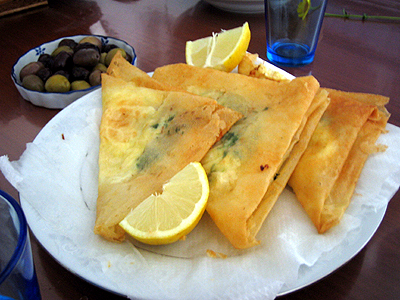
In one of Do's few memories of his great-grandmother, he was thirteen and visiting extended family in Paris, and his Tunisian great-grandmother made him brik. He still recounts the event with wonder and adoration. Brik are, essentially, deep-fried dough pockets filled with raw egg and a salty filling. The recipe in North African Cooking calls for anchovies and capers. About a teaspoon of the filling and a small raw egg get dumped into the center of a wonton wrapper (actual Brik dough is super time-consuming to make, my used-to-live-in-Algeria Mom informs me), the wonton wrapper seals around the filling, and the whole thing gets deep fried until barely crispy. As Do puts it: "It's salty, deep fat fried egg. What's not to like?" (The photo above is clearly not my creation. It was taken by Sheryl of the Crispy Waffle blog during her vacation in Tunisia, and can be found here.)

Fiasco. Bawling in the bathroom.

::Do Grabs The Talkie Stick ::

So, anyone that lives with a foodie knows all about managing explosions in the kitchen. I have generated a little check-list for myself.
After hearing loud shrieking/sobbing from Neen while she is cooking:
1. Check to make sure all limbs are attached. [If no - proceed to emergency first aid routine]
2. Remove any fire hazards from heat. (If something might overcook - remove that from heat too.)
3. Attend to Neen.

There were no missing limbs in this situation, but there was a fire hazards - so I turned the heat off on the oil before proceeding back to the bathroom to find out what was eating Neen. Now, it is worth mentioning that this is a VERY hard recipe, and I had known it from the start. I had tried unsuccessfully to convince her of this. So when Neen felt like she just couldn't make it work, the resulting meltdown was not completely unexpected.

[Neen: insertion] Actually, Do was trying very hard not to giggle. We had just seen Julie & Julia that afternoon, so the over-the-top explosion was just too stereotypical for words. Of course, his trying to suppress his smirk made me giggle... which was naturally followed by an especially loud wail to prove I was serious. [/Neen insertion]

Thankfully the solution to my portion of this problem was VERY easy - I just had her take bite out of one of the "failed" Brik she had just made. Fabulous - melt in in your mouth, salty, and rich. Everything Brik should be. So they weren't picture perfect, so what? Some of the wrappers didn't shut, but upon returning to the kitchen we realized that (of course) you are supposed to soak the wonton wrappers in water before using them - the recipe hadn't of course mentioned that! Once we corrected for this issue, we actually turned out some impressive-looking ones.

The happy ending to this story was a delicious meal of brik and white wine, set to candlelight. Perfection.

Neen: Yeah. Still not happening again any time soon. I'll wait to get hands-on instruction from the experts the next time we visit Do's family in Paris.

Brik bil Ancouwa (Brik with Anchovies)
a package of large spring roll wrappers
1 Tbs olive oil
1 large onion, finely chopped
1 1/2 Tbs fniely chopped canned anchovies
2 Tbs chopped parsely
3 tsp capers, drained
oil for frying
Small fresh eggs (Neen: this is critical)

Heat olive in oil in a small frying pan. Add onion and cook gently until very soft and translucent (~12-15min), stirring often. Add anchovies and mash in. Remove pan from heat, stir in parsely, capers, and add pepper to taste. Let cool.

Separate spring roll wrappers and soak ~5 or 6 in a bowl with cold water, to soften them. Add oil for shallow=-frying to a depth of 1/4" in a 10" frying pan and heat well. Open all the windows in your kitchen. Turn on air vent. Prepare your partner/brother/sister/child to handle the fire alarms if/when they go off.

Place one soft wrapped on a plate. Add ~1 Tbs anchovy filling in a heap on one side,with the edge of the filling just touching center. Make an indent in the filling and break one egg into it. Fold the wrapper over to enclose the filling and press the edges to seal. Try not to break the egg yolk, but if you do it's okay.

Slide brik immediately into the hot oil and shallow fry until golden brown and crisp, about 45 seconds on each side. Lift out and drain on paper towles. Repeat with remaining brik/filling. Serve immediately.

Wednesday, August 19, 2009

Quick and Elegant Salmon with Israeli Coucous Salad

Major success on the cooking front last night:

1. Had an unexpectedly delicious dinner
2. Rediscovered an old cookbook
3. Made up a successful dish from scratch
4. All prep took less than 20 min.

Did I say major success?

When we were planning the weekly menu last weekend, I picked up our copy of New Kosher Cuisine. It's a community cookbook that I'd gotten back in D.C. on recommendation from a good friend. It turned out to be too practical for our cooking style back then (though the Challah recipe is still our go-to challah recipe), but our interests and time constraints have changed radically in the past year or so. Like all community cookbooks it can be hit or miss, but I've gotten better at guesstimating what a dish would taste like based on reading the recipe. And oh man, was "Company Fish" a hit.

It's supposed to be a Shabbat dinner meal, when you have company over (hence the title of the dish). I'm not sure that would work for the super observant unless they were also super prompt (the fish needs to go straight from the broiler to the table, meaning your guests must already be home from shul and/or you don't mind using your broiler after sundown), but it's otherwise perfect for inviting guests over on a weeknight. The dish is super quick: since you marinate it ahead of time, it takes literally no more than 10min to have it from the fridge to the table. It's also quite impressive: strong complex flavors infuse all of the fish, and you really can't help but make sure the last drop of sauce is consumed. And the marinade ingredients are all standard (inexpensive) pantry fare -- what's not to like? Added bonus: the flavor of the sauce and the texture of the fish are on showcase here, so it's good for folks who are apprehensive about "fishy" flavors AND you don't need to feel compelled to buy expensive cuts of fish. Fresh fish, and voila.

The other success was the impromptu salad. Again, very simple: it was all ingredients we had in the fridge, and the chopping was the longest part. But it was so full of flavor and the freshness of summer that (don't read this part Mom) we totally started digging into the serving bowl with our forks once we we'd inhaled the servings on our plates. Great showcase for those uber fresh farmer's market veggies.


Israeli Couscous Salad
, serves 4 generously

1 cup Israeli Couscous
1 cucumber
1 beautiful heirloom tomato,
4 oz feta
1 small-medium red onion
2 lemons
1/2 cup chopped mint

Toast the israeli coucous in a little bit of oil, stirring regularly. Meanwhile boil water in a kettle. Once the couscous is toasted to your taste, pour ~2 cups boiling water into the pot (slowly, and stand back, it's pretty exciting). Simmer water for ~6min, or until coucous is done. Drain couscous, put into salad bowl.

Mince 1 red onion, chop 1 cucumber, 1 tomato, and 1/2 cup of mint, and all it all to the salad bowl. Crumble 4oz of feta into the bowl. Add the juice of two lemons. Salt and Pepper very generously.


Company Fish (New Kosher Cuisine cookbook), serves 8-10.
Neen: don't bother being too precise with your measurements. And don't be afraid to cut the recipe down -- fish is always best straight out of the oven.

1/3 cup soy or tamari sauce
1/2 tsp black pepper
1/4 cup fresh lime juice
2-4 cloves garlic, minced
1 Tbs Dijon
Grated zest of two limes (Neen: or a couple tsp lime juice, if that's what you have)
1/4 cup peanut oil
1/4-1/2 cup scallions, chopped
4 lbs ocean perch or salmon, skin removed.

Combine marinade ingredients in a small bowl. Place fish in a non-aluminum dish and cover with marinade. Refrigerate for 3 to 6 hours.

Preheat broiler. Broil fish 4 to 8 min until brown. Transfer to platter and spoon sauce over fish. Serve immediately.

Thursday, July 31, 2008

Clam Chowder in Sourdough Bowls: Bringing the Wharf home

First, Don't Forget to Vote in Do's Poll at right! It closes Saturday at 9 a.m.

I walked around the Knob and Russian Hill neighborhoods yesterday. Wait, scratch that. I freakin' mountain-climbed up and over the tallest, steepest hills in San Francisco yesterday, and have the blisters to prove it! I mean, look at this photo (courtesy of Pam's Public Gallery). On many streets, the cars HAVE to park at a 90 degree angle, or they will roll down! Whose brilliant idea was it to build a city on Monster Hills? (Reminder, this is the girl from Chicago, the city that's flatter than a pancake).

I was duly impressed.

In addition to checking out the parks and views of Russian Hill, I found the Albert Einstein stained glass window at Grace Cathedral, slurped down a thick chocolate shake at Ghirardelli's Square, and fought off tourists at Fisherman's Wharf (it was a long walk).

It's good to be unemployed.

Poor Do.

Do visited San Francisco once as a kid, and has vivid memories of the Fisherman's Wharf. This makes sense: the place may look depressingly crowded and commercial to adults, like a tourist death-trap, but kids are entranced. The gigantic carousel! The tchochkes! The ubiquitous sourdough bread bowls filled with clam chowder! It's like Disneyland! Do has mentioned those sourdough bread bowls at least once a week since we moved to Oakland. (model at left is from alexanderchen.com)

So I decided to surprise him. If Do couldn't leave work and frolic around San Francisco with me, then I would bring San Francisco to him. I would make homemade clam chowder and serve it in sourdough bread bowls.

(I'm embarrassed to admit it, but I was so excited about the idea that I had to call him up and share ... so much for the surprise part. But it did mean that he was a very happy boy for the second half of the afternoon).

The bread bowls were easy: Boudin Bakery, a company that prides itself on serving San Francisco sourdough since the '49ers showed up, has a demonstration bakery right on the Wharf. Their smallest sourdough round was half a pound, and the samples tasted quite good, sour and fluffy with a good crust. I picked up two, and sauntered to the Bart (well, limped -- remember those blisters) looking more French than the hordes of mostly-French tourists (I was carrying fresh bread; they were wearing "I escaped Alcatraz" sweatshirts and shivering in their shorts).

The Clam Chowder took more creativity. Once I got to thinking about it, I started getting less pleased with myself and more intimidated: Do's very particular about his clam chowder. He feels very strongly that it shouldn't involve any pork products, it should have almost-overwhelming clam flavor instead of veggie flavor, and it should be super thick. His family is into clam chowder in a big way: last summer his parents embarked on a Great New England Clam Chowder Roadtrip. Not to mention that we regularly stuffed ourselves on the best Clam Chowder in Washington D.C. Well, at least that gave me something to shoot for.

The cans of chowder on prominent display at the wharf were bypassed in favor of guidance from Foodie Fashionista (she adapted Barefoot Contessa's recipe) and Diannes Dishes (with a brilliant secret ingredient -- Bay Seasoning). Their recipes and comments really helped me figure out what I wanted and how to get there. I wanted caramelized veggies, so I sautéed them instead of boiling them. I wanted thick, so I made a substantial roux and leaned towards Barefoot Contessa's artery clogging quantities of butter and cream. I wanted lots of clam flavor, so I used a ton of clam juice and clams.

Finally, it was done. The consistently was right, the spicing was right (the Bay Seasoning and thyme are indispensable), but it was missing some deeper, underlying flavor. Do's suggestion of Soy Sauce sounded so weird that I wouldn't let him add it to the whole pot, but he tested it and it worked! I know it sounds crazy, but this clam chowder turned out amazing and definitely competes with our Washington D.C. favorite. Complete triumph. Since this is one of the first times that we've creating a recipe and it worked, we'd like to share this recipe with Lore and her relatively new Original Recipes event.


Do's New Favorite Clam Chowder
8 Tbs butter (1 stick), divided in half
1 yellow onion, chopped
2 large celery stalks, chopped
2 large potatoes, diced
1 1/2 teaspoons thyme leaves
1 Tbs Old Bay Seasoning
3 bay Leaves
1 teaspoon kosher salt
1 teaspoon freshly ground black pepper
4 cups clam juice (3 bottles)
1/4 cup all-purpose flour
1 Half-Pint carton of heavy whipping cream
3 cups Baby Clams, drained and rinsed. (3 cans)
Half a bag of frozen corn
2 1/8 tsp Soy Sauce
Garnish: Chopped parsley

Melt 5 tablespoons (1/2 stick) of the butter in a large heavy-bottomed stockpot. Add the onions, celery, and potatoes and cook over medium-low heat for 10 minutes, or until the onions are translucent. Be sure to stir regularly to keep the potatoes from sticking to the bottom. Add the thyme, Old Bay seasoning, salt, and pepper and cook for another 5 minutes. Add the clam juice and the bay leaves, bring to a boil, and simmer, uncovered, until the vegetables are tender, about 20 minutes.

In a small pot, melt the remaining 3 tablespoons of butter and whisk in the flour. Whisk continuously over the lowest heat setting for 3 minutes. Gradually whisk in a cup of the hot broth from the pot and then pour this mixture back into the cooked vegetables. Carefully whisk the chowder to incorporate the roux (this is boiling chowder people!). Simmer for a few minutes until the broth is thickened.

Add the heavy cream, the corn, and clams and heat gently for a few minutes to cook the clams. Add the soy sauce and taste for salt and pepper. Garnish with parsley and serve hot in bread bowls!

Yields 6-8 servings

Thursday, May 29, 2008

Red Snapper Delight

There is something I have to admit. It's about my past. A sordid detail - yes, thats right, I grew up in the Midwest. Don't get me wrong, I love Chicago and Naperville, where I grew up, is a really nice suburb. But, fish was just not readily available to the home cook. My father grew up out on the Chesapeake, so he would bring home a nice piece of fish every time he could find one - but, it's the Midwest, that isn't so often. The problem is not that no fish is sold in the markets, it's that the fish has, for the most part, been frozen and tends to be fairly low quality - even if you make the run over to Whole Foods. The classic fish dishes I grew up on are fried Catfish and seared Salmon. My father has certainly prepared other fish as well, but those two are the ones that would happen regularly.

Now, however, I leave on the East coast - soon (so very, very soon), I will be living on the West coast. It is really high time I got to know my Snapper from my Striped Bass - and learned to cook them too. Neen and I have done a few seafood dishes since we have gotten out to D.C., but mostly they have revolved around either clams or mussels. So this weekend I decided to give cooking fish a try. Lucky for me, I just happened to have a recipe from last month's Food and Wine magazine for "6 quick fixes for fish fillets." The decision on which to make was easy enough: their picture of the Sea Bass Fillets with Parsley looked divine. Now, being F&W, when they say "quick fix" they mean that it takes only 4 prep-bowls, 3-4 trips through a blender (for various pieces of the sauce), and approximately 1 hour of hand time. This is not exactly what I would call a "quick fix," but the chef is well repaid for the work when the dish is served.

The original recipe called for using Sea Bass, but I have always been addicted to Red Snapper for my light, flaky fish cravings - this started when I was young and we would go to Thai restaurants and they would have a fried Red Snapper glazed with "Thai sauce." Here, the preparation of the fish itself is a little complicated, but the basic idea is to bread the fish with a mixture of bread crumbs, parsley, salt, and pepper. It is worth noting that the method they use for breading is one of the most successful that I have worked with. First they coat the fish in flour, and then they coat that in egg, before dredging in the bread crumbs. I have never tried breading in that order before, but it worked very well.

Once breaded, the fish is cooked in oil and butter and then topped with a lemon-parsley cream sauce. The flavors work together perfectly. The Red Snapper comes out light and flaky, covered with a crispy shell of bread crumbs. The sauce on top carries enough of the lemon flavor to excite the palate if the fish is very fresh, or mask some of the fish-y flavor if the fish is slightly old. You might wonder how I know that ... well, because we actually made this dish twice. Once just after purchasing the fish then again a couple days later to use up what was left. I thought about cooking a different recipe, but I couldn't find one that I had most of the ingredients for and looked as delicious as this recipe is.

All this to say, if you can get really fresh red snapper, it is an amazing dish. And the breading technique is well worth remembering.


"Red Snapper" Fillets with Parsley Sauce
Cook Time: 40 min (or so F&W claims)

1.75 cups fresh bread crumb
1 cup finely chopped parsley
salt and ground black pepper
4 tablespoons unsalted butter
1 shallot minced
1.5 cups chicken broth (low sodium is best)
3 tablespoons fresh lemon juice
3 tablespoons creme fresh
.25 cup extra virgin olive-oil
all purpose flour
2 large egss, beaten
4x6-oz Red Snapper Fillets

Preparation for Sauce:
1. In a small saucepan, melt 2 tablespoons butter. Add the shallot and cook over medium heat until translucent (~1 min). Add chicken stock and lemon juice then boil over high heat until reduced to 1 cup (~15 min).
2. Whisk in the creme fresh with 1/2 cup parsley and 1/4 cup bread crumb. Scrape sauce into blender and puree. Strain sauce back into saucepan and warm gently.

Preparation for Fish:
1. In a large bowl mis 1.5 cups of bread crumb with .5 cup of parsley. Add 1.5 teaspoons of salt and 0.5 teaspoons of pepper.
2. If you haven't already, remove skin from fillet. Put flour and beaten eggs into two shallow bowls.
4. Season the fillets with salt and peppers, then dredge them in flour, dip in the beaten egg, and coat with the bread crumb mixture.

Cooking the Fish:
1. melt 2 tablespoons of butter in the oil over moderate heat.
2. When the butter starts to brown slightly, add the fillets to the skillet until browned on the bottom (~3 minutes). Flip the fillets and cooking until just white throughout (~2-3 minutes).
3. Transfer to plates, spoon sauce alongside, and serve.

Tuesday, May 27, 2008

Mint 2.0: Rice Paper Rolls

Yesterday was Memorial Day. Do and I fully intended to go to Arlington National Cemetery, both to pay our respects and to appreciate the full magnitude of both the day and the place. It's apparently the thing to do on Memorial Day in this town. A freakin' convention of Motorbikers pour into town to be there, the President shows his face, etc. The cemetery even holds a special 3x year ceremony in the heat of the sun for mad dogs and English tourists who have a taste for pomp and circumstance.

We never made it. It was too damn hot and sunny. And Do refused to wear sunblock or to strip down to cooler clothing. We're talking Memorial Day at Arlington Cemetery, he didn't want to sh
ow up in a t-shirt. So we missed it. We spent the day on computers in a coffeeshop and then cleaning the house. It was okay. A little bittersweet, but okay.

2 weeks until Do leaves for California, 3.5 until me and my Dad start our grand coast-to-coast roadtrip.

The big overachieving success of the weekend were these Vietnamese rolls. I'd clipped the recipe from Bon Appetit magazine, pretending that I'd be cool enough to follow-through but speculating that, really, the recipe would be another long term resident in my clippings folder. Along with the recipes that call for unfindable ingredients or 2-days worth of prep work.

Well, the recipe does involve a lot of prep work. Some less onerous than I'd feared: we picked up a package of grated coconut (so much for the 'fresh' part. You pick your battles), all the greens and peppers can be finely diced in the food processor, and the rice paper was surprisingly easy to find (Whole Foods) and to use (dunk each piece in warm water for 3 seconds before using). However, the recipe cavalierly calls for peeled, cooked shrimp... and Do finds pre-frozen seafood not worth eating. So I got my first experience peeling, deveining, and sautéing shrimp. The deveining part was particularly...exotic.

The end product was surprisingly refreshing and light, even though we probably wolfed down two servings each. There was that sea-taste, and the green crunch, and the delicate rice paper-fresh mint combination. We ended up adding whole mint leaves to the outside of each roll, to maximize that refreshing, summery flavor. It was lovely, really. Perfect for a weekend summer lunch. There was much self-satisfied 'I actually made that!' head-swelling going on. Mission accomplished; recipe conquered.

The catch, as we discovered 24 hours later, is that leftover rolls lose a lot of their fresh flavor. The zesty dipping sauce helps cover that somewhat, but they're still better the first time around. Since the technique itself (minus the shrimp) isn't particularly hard or time-consuming, it'll be interesting to experiment with different innards. The possibilities of stuffed rice paper rolls now appear endless...


Given that this was a victory over an intimidating clipped recipe, I'm sending
this over to Ruth's Kitchen Experiment's Bookmarked Recipes, a (somewhat)new weekly event that could sure help us get through our giant file folder of magazine clippings!


Shrimp and Coconut Rolls (Bon Appetit)

Makes about 15 rolls, serves 3-4 as a meal
  • 10 oz peeled cooked shrimp, cut into 1/4- to 1/3-inch pieces
  • 2 1/2 cups thinly sliced iceberg lettuce (about 1/4 large head)
  • 1 1/4 cups finely grated peeled fresh coconut
  • 1/2 unpeeled English hothouse cucumber, seeded, cut into 1/4-inch cubes (1 cup)
  • 1 tablespoon plus 1/2 cup fresh lime juice
  • 6 teaspoons fish sauce (such as nam pla or nuoc nam), divided
  • 4 1/2 teaspoons sugar, divided
  • 3 teaspoons minced seeded red or green serrano chiles, divided
  • 2 tablespoons finely chopped green onion
  • 2 teaspoons chopped fresh mint leaves (N: try whole leaves, and more of them)
  • 15 8- to 9-inch-diameter rice paper rounds (spring roll wrappers)

Preparation

  • Combine shrimp, lettuce, coconut, cucumber, 1 tablespoon lime juice, 4 teaspoons fish sauce, 1/2 teaspoon sugar, 2 teaspoons chiles, green onion, and mint in large bowl.
  • Moisten kitchen towel. Squeeze out excess moisture and lay towel flat on work surface. Fill large bowl with warm water. Following the directions on the package, submerge 1 wrapper in water until beginning to soften, about 20 seconds (mine took 3 seconds). Place on damp towel. Place 1/4 cup shrimp mixture in 3-inch long strip down center of wrapper. Fold in sides of wrapper over filling, then roll up tightly, enclosing filling. Repeat with remaining wrappers and filling. [DO AHEAD Can be made 8 hours ahead. Place on baking sheet lined with parchment paper, cover with damp paper towels, and refrigerate. Let rolls stand at room temperature 10 to 15 minutes before serving.]
  • Mix 1/2 cup lime juice, 2 teaspoons fish sauce, 4 teaspoons sugar, and 1 teaspoon chiles in small bowl. Serve rolls with dipping sauce.

Thursday, May 8, 2008

Chieboujen: Neen's work in progress

[I'm a day or so late in getting this post up because, much to my surprise, I found it really hard to write. I've written about my relationship with Africa so many times for scholarship/admission essays that it feels like the story and the feelings are no longer mine. Like they belong on my business card or to some University admissions office. Not that it helps that these events took place 10 years ago, and my identity has grown and been shaped by much since then. This all required some unforeseen processing. Anyways. Sorry for being late.]

When I was six, my family moved to Senegal; when I was nine, we moved to Gabon. With a little luck and a little bribery, my folks got my brother and me into excellent local public schools where we were the only Americans amidst lots of little French expats and upper-middle class Senegalese or Gabonese. Needless to say, with no English outside the home, we went from no knowledge of French to bilingual in about 5 days flat. Kids are amazing like that.

I have come to realize that the expat experience for a kid is entirely different from that of an adult. As as child, I had barely an inkling that Senegal was undergoing an important Presidential election, that Zaire was imploding right next door, or that scary-ass forms F.G.M. were taking place in the empty lot around the corner. I was completely oblivious to socio-political history: I couldn't yet differentiate between the 'normal' and the 'abnormal' because 'norms' changed every time we moved. Even poverty. My 7 year old self saw the beggars, the lepers, the villages to which we donated our old clothing... but was completely oblivious to the magnitude of the poverty or the gross inequality among classes (well, okay, when I was 11 even I was grossed out by the fact that there was a swamp shantytown directly across the street from the gleaming, mile-long Gabonese presidential compound). If anything, America was weird with its clean, empty suburban roads and its gratuitously huge cinemas. Squeaky clean. Kinda creepy.

Then my family left Africa when I was 12 and I didn't return until two summers ago, when I got funding to do my B.A. thesis research in Mali. It was a pretty intense summer. My first extended period of time away from Do, the aid project that I was studying turned out to be a glorious, expensive fiasco, and here I was, an adult, submerged in a culture that I had happily navigated with ease as a kid. Like I said, intense. In that soul-searching, God-searching, priority-rethinking kind of way. [Okay, this post now officially gets this 'Existential Ruminations' label.]

Just before I was to leave Mali, my host father (who turned out to be my father's baptismal godfather from back in their Peace Corps days...small world...) arranged to serve Chiebujen at a large party. This was a lovely, personal goodbye gesture: Chiebujen (pronounced Cheboojen) is the Senegalese national dish. It's a very hearty fish and vegetable stew served over rice or couscous. Imagine if you will, a platter the size of your coffee table, piled high with rice/couscous, with fist-size hunks of fish, cabbage, yam, carrots, okra etc, and 10 or so people squatting around eating with their hands. It was so delicious. Addictive. Particularly so because I had far away memories of these flavor combinations. Even as my adult head was feeling seriously alienated by a culture that I thought would be familiar, Chebujen felt like home to my taste buds.

So I'm going to recreate it. Given that I'm working with American ingredients and very vague childhood memories, this is probably going to take numerous permutations. Please, anyone in the blogosphere, your suggestions are more than welcome (I'm particularly looking at YOU, Mom and Dad).

For Monday night's take on Chebujen, I combined a Nytimes Thebu Djen recipe and a Thieboudienne recipe that Chicago's Field Museum distributed during an exhibit on Senegal in 2004. The process of combining two fairly complicated recipes on the fly, all the while comparing the flavors to the echoes somewhere in the recesses of my memory, was...er... hard. Especially because, when I did get the flavors right, they provoked emotional flashbacks like no other. You know how the senses provoke more emotional recollections than words do? Songs, taste, places, pictures? yeeeah.

Monday night's Chiebujen was no where near perfect, but it was definitely heading in the right direction. The recipe below is exactly what I did, errors and all, and the italics are what I'm going to change next time. In general:

- It needs to be exponentially hotter. Scotch Bonnet peppers, here we come.
- I need to use whole (cleaned) fish. And more of it. This fish cube idea is for toubabs (West African for gringo).
- I need to track down dried snail or a more authentic version of dried fish than Herring. Herring?! WTF?
- No homemade or tinned chicken broth. Bouillon cubes all the way. Wish I could find the Maggi brand.

I need to track down an African market; my folks suggest that there may be one near Adams Morgan.

Neen's first take on Chiebu Djen
(Ideas for next time in Italics)
Serves 6-8.

3/4 cup loosely packed cilantro leaves
4 scallions (white and lower green parts), trimmed
4 cloves garlic, peeled (I'd increase)
4 Serrano chilies. (Oh my gosh, this needs to be upped. Either increase by 150% for starters, or go to scotch bonnet peppers)
1 lb firm fleshed fish fillets, such as tuna, shark or swordfish, cut into 1/2" pieces (yeah, the whole cubes of fish is so toubab. And there wasn't nearly enough fish flavor. Next time: 2 whole red snappers (3-4lbs total), cleaned, scaled, and cut into thirds)
3 onions
2 garlic cloves
1 red bell pepper (Umm, check if this is a Toubab addition)
1.5 oz dried fish (I could only find dried herring, talk about not authentic! Next time, go to an African market and try to find yete (dried snail) or guedge (dried fish), or at worst dried cod. And double the quantity.)
1.5 cups peanut oil (we're deep frying? Really? Check out other recipes)
1 can (6oz) tomato paste (Halve the quantity of tomato paste and water)
4 large carrots
1 small green cabbage
1 sweet potato (standing in for yucca or yam, try to find one of those. Oh and add 0.5 lbs calabaza or butternut squash)
4 cups chicken broth (Make it using bouillon cubes, preferably Maggi)
Chicken bouillon cube (Shouldn't need this if follow above instructions)
12 Okra pods.
12 1/4" pieces of tamarind
3 cups rice (For God's Sake, try to find some long grained variety that isn't Jasmine rice.)
  1. In the food processor, mince cilantro, scallions, 4 garlic cloves, and 1 stemmed Serrano chili.
  2. Create a pocket in the fish by slicing horizontally through the center of each piece, leaving one side attached. Fill the opening with about one teaspoon of the cilantro mixture. Pack the fish in a bowl, cover with any remaining cilantro mixture, and fridge until needed.
  3. Prep work time! Assemble in one bowl 3 chilies (stemmed, split in half), 3 onions (chopped), garlic cloves (minced), bell pepper (diced), and dried fish.
  4. Pour peanut oil into 2 gallon dutch oven over high heat until a piece of onion dropped into it sizzles vigorously. Add your prepped veggies from Item 3, stir occasionally until onions begin to brown (10min). In the meantime, in a medium bowl (or your now empty veggie prep bowl!), whisk tomato paste with 1 cup water. When the onions are just beginning to brown, add diluted tomato paste. Cook uncovered, stirring occasionally to keep from scorching, 15 min.
  5. In the meantime, turn oven to warm setting (200 degrees). Prep carrots (cut into six pieces) and sweet potato (peeled, cut into six pieces), set aside, and prep the cabbage (cored, cut into six pieces), set aside. When the stew is ready, add chicken broth with 3 cups of water and a Chicken bouillon cube to the stew pot. Turn heat to high and return to a simmer. Add the carrots and sweet potato and simmer for 5 min. Add the cabbage and okra, cover and simmer for 15 min. Add the stuffed fish and cook 5 minutes more or until the fish is cooked through and the vegetables are fork-tender.
  6. Using tongs, carefully transfer the vegetables and fish from the stew to a platter, cover with aluminum foil and place in warm oven. Bring the remaining stew to a boil, add tamarind. Add rice, reduce heat to low and cook until tender and all the broth has been absorbed. (10-20min). (I had to add a little extra water).
  7. On a wide communal platter, spoon a portion of rice, mounding it in the center. Add veggies and fish around the sides. Serve Immediately.

Friday, April 11, 2008

Growing Up and Soft-Shelled Crabs.

Having my parents visiting for a week has unexpectedly kicked the internal philosophizing into motion. Especially with Do out of town at his conference, it feels like the three of us are walking a very fine line between 2008 and 2001.

Okay, that may not seem like much, but in 2001 I was 16. A pretty independent and headstrong teenager, I had good relationships with my parents, was free to proceed about my life and the city more or less unquestioned, and avoided most “common space” chores (making dinner, cleaning, lunches) because it didn’t feel like my “domain.” The parents knew how to do that sort of stuff -- what if I did a chore wrong and got corrected? I would probably have gotten indignant (“hey, I was trying to do you a favor!”), there would have been a fight… why risk that? I stuck with tidying, walking the dog, setting the table, and verbalizing appreciation at dinner time. Anything that required independent thought, I left to them. It just seemed easier that way (and, like all teenagers, I was lazy!).

In 2008, I’m 23. I’ve lived outside of my parents’ home for 5 years, two of those in a one-bedroom apartment with Do. We’re adults now, and it’s our home. We make executive decisions about cleaning, using up leftovers, mending, etc. We know to spontaneously grab a cleaning product if the bathroom floor looks questionable. So we don’t wash our sheets every week or swifter as often as we should, but our home is usually reasonably tidy and the kitchen is always clean. I'm an adult now.

So living with my parents over the course of the past week in my teeny apartment has prompted a lot of new scenarios: How much can my parents clean my apartment before it goes from extremely generous to intrusive? How can I be a gracious recipient of this generosity without reverting to the lazy teenager who assumes that the kitchen will be cleaned and the dinner prepared by the parents? (Note, I haven't done anything in the kitchen more laborious than sitting and chatting all week). When I come home from a long day at work and they have the house cleaned and dinner prepared, well, who is hosting whom?

I guess that’s it: it’s freakin’ hard to follow the standard scripts of host and guests when it’s a child and her parents. This may just be a post-collegiate thing, but I doubt it. I bet that time and age allow you to write new scripts for yourselves, but I bet that the standard ones never fit. They’re your PARENTS after all, how can they be GUESTS?

Of course, being in your early twenties also means that you HAVE NO IDEA WHAT YOU’RE DOING half the time (There, I admitted it, ha! See if you can coax a similar statement out of your teenagers!) and, unlike when you were a teen, you recognize that you really need to learn how to sew on a button/use the broiler/do your taxes. No one is going to take care of my chores if I surrepticiously avoid them because I don't know how (though I did try to shove off my taxes on D this year... but he's off at that darn conference!). What a relief to have Mom and Dad physically present to guide me through, step by step.

For example, this week I had my first encounter with soft-shelled crab.

When we were exploring the Dupont Farmer’s Market on Sunday, the very last stand was selling flounder and soft-shelled crab. The gentleman explained to us that we’re about 3 weeks early for soft-shelled crab, but that he was selling some that he caught last season and froze. Sure, why not? We picked up three to go with our morels and waltzed off.

Now, I’ve been to a crab feast before, where you buy a heap-o-steamed crabs from the fish market, cover the (outdoor) table with newspaper, and go at them with hammers and picks. Brute force, baby! You pick out your meat, avoiding the intestines and the shell parts. It's disturbingly fun. But the thought of taking a whole crab, a WHOLE crab, and chomping on it, seems kind of weird. Maybe that’s why most folks hide soft shelled crabs in sandwiches.

But my Mom took care of it all. She knew how to season it, how to bread it, how long to cook it, and executed the whole thing in about 5 minutes flat. It would have taken me 1 hour of research, 30 minutes of preparation, and five minutes of hyperventilating over the thought of the whole crab. As it was, I had the whole thing on my plate before I thought to get nervous.

And they were great! This was crab, with no distractions: no sandwich, no shell, no cool hammer. Breaded & sautéed for texture, but still the creamy crab meat inside. No stress. Eye-grabbing presentation. The crabs themselves were a little tough and chewy, which probably means that they were caught and frozen late last season. No problem: in three weeks, when soft shelled crabs ARE in season, I’ll know what to do with them.

Thanks, Mom.

Monday, March 17, 2008

The Fish Market, or Surviving Holy Week

If I contemplate another 5 days without meat, I think I'll scream.

This may be because we've reached the last week of Lent, the holiest week in the Christian calendar, during which cheating is definitely not an option. (If you have no idea what I'm talking about, we've sentenced ourselves to a meat-less Lent, Sabbaths excluded)It may also have something to do with the fact that we ate every meal out this weekend, for the most part at fabulous seafood places.


Maryland Blue Crabs
Originally uploaded by .Angeli


Why on earth did we do this to ourselves? Why did we throw away our precious few meat days on fish? Well, coincidentally or not, some of D.C.'s best casual restaurants happen to be seafood joints and D's parents were visiting from the Midwest. We had sinfully good oysters and fried clams at Hank's Oyster Bar, hit up the Smithsonian (I'd forgotten that the West Wing of the National Gallery of Art is so freakin' impressive), overordered at Bistro Bis, and engaged in hand-to-hand combat with the tourists at Mt. Vernon (I abhor adolescent school trips. They're too busy with their own complicated social structures and taking photos of everything to pay attention to what they're looking at). Best of all, we had Sunday morning breakfast at the D.C. Fish Market.


FishMarket8.jpg
Originally uploaded by .Angeli


Now is time for me to wax poetical. The Fish Market is this dirty, mucky place on the wharf, buried just below a particularly hard-to-navigate piece of D.C. city planning and therefore impossible to find unless you're looking for it. On this particular morning, it was cold, wet, gray, and absolutely glorious. More fresh fish than you could shake a stick at, anything that's in season, all beauties. Crab, alive or already cooked. Whole fish, steaks, or fillets. Local fish like trout or flounder, or exotic swordfish and tuna and salmon that have been flown in. And if you're not shopping for dinner, there are hush puppies, stuffed crab, oysters shucked in front of you, and the best New England clam chowder I have ever had at Jessie's Cooked Seafood stand.


FishMarket36.jpg
Originally uploaded by .Angeli


Okay, so that's not saying much, since my experience with clam chowder is limited. However, D's Mom assures me that it's truly amazing and I've decided that she's a credible source, given that she entitled her last vacation "The Great New England Clam Tour" and drove around tasting clam chowder morning noon and night. Jessie's wife has been making clam chowder from the same recipe for over 20 years (so claims Jessie), and uses a clam-based stock instead of ubiquitous seafood stock (so say my tastebuds). Creamy, but not too creamy, with chewy fresh clams, it tastes like the sea. It is by far the best eating-out option in D.C. And at $5 for an extra-large serving, you can go back again, and again, and again. Next time you're in D.C., go!


But back to Holy Week. With 5 weeks of meat-less eating under our belts, what have we learned? Well, for one, that our diet depends on meat a lot more than we thought. Almost all soups and sauces call for chicken or beef stock for heartiness, and many of our favorite pasta or other 'one-pot' dishes call for small quantities sausage or some other meat product for flavor/texture. There's a big difference between dishes-not-revolving-around-a-meat-main and meatless dishes, which we didn't fully appreciate when we started this.

We've also come to realize (duh) that eating vegetarian in the winter sucks. In the summer, you just throw some fresh veggies together and sprinkle some lemon on and it's the best meal you've ever had. In the winter, when you crave warm, hearty meals, mediocre imported veggies simply aren't as satisfying. We've come to depend on carbs and beans a lot. I don't want to see another lentil soup until 2009. So, this excercise brought out the worst in both the veggies and in our culinary patience. It didn't help that we're both gratuitously stringent when it comes to recipe quality -- if it's not the best, we'd rather not eat it.

Yesterday evening, when we sat down to put together the week's shopping list (yay for having the car back and being able to do a mass shop!), it was pretty depressing to realize that we couldn't find anything vegetarian that we wanted to eat. We leafed through mountains of cookbooks and recipe clippings, but nothing that was in season seemed inspiring or exciting. As noted in a hilarious post by Laura at The Kitchen Illiterate blog, hearty vegetarian recipes have an unfortunate tendency to turn out as monochromatic mush. The irony is that, within a few weeks of returning to the world of the omnivores, it'll be spring and we'll be feasting on asparagus and peas and making dishes far too light for any sort of meat addition. Kind of funny, but also kind of depressing.

So has it been worth it?
From a religious perspective, absolutely. Oh man, do I ever feel like I'm the fasting penitent, waiting with anticipation for Easter. It's been a while since I've felt this appreciative that the Almighty made creation and pronounced it edible. From the ethical standpoint, I'm still inclined to increase our consumption of "happy" meat once we get through this -- yesterday, while driving to D's parents' hotel, we finally stumbled across the Dupont Farmers' Market and man is it big! But from the diet standpoint? I don't know. Maybe once this is over, I'll be more easily satisfied with meat stock in my soup or small quantities of sausage in my pasta... or maybe I'll be so sick of eating vegetarian that I'll cook nothing but meat-based dishes for months.

In the mean time, 4 more vegetarian dinners until Shabbat.

Wednesday, March 5, 2008

The Great Clam Massacre


Clam pasta
Originally uploaded by Neenabeena


Neen tells me that there is nothing sexier then a man passionate about cooking. Thankfully, she appears to be unconcerned about the actually quality of the dishes created. I suspect that my cooking scores high in the "Creative" category (with little idiosyncratic touches thrown in to the dish), but lower than average in "Quality."

Tonight was no exception. I saw a jar of clam juice at the grocery store this weekend and made an impromptu decision to make my mother's creamy clam pasta sauce. Neen picked up some cans of clams for me on her way home (yes, it is made with canned clams - I come from the Midwest, there is no such thing as fresh clams). I was prepared to produce this dish, when I realized that I also happened to have the ingredients for a clam pasta sauce from the Silver Palate.

Now, usually, cooking out of the Silver Palate is nothing but a good idea. I have a very healthy respect for their recipes. Tonight, however, not only did I decide I would cook their sauce, I also decide I would "improve" it. The base of the Silver Palate sauce is garlic, clam juice, herbs, and olive oil. (This can be compared to my mother's recipe which uses: garlic, garlic, clam juice, garlic, butter, and garlic. Oh, and cream and garlic.)

My improvements for the Silver Palate recipe were the addition of white wine (if you have also read my post on Lamb Stew, you may begin to see a trend), changing the oil for butter (a little richer), and thickening the sauce with a roux at the very end (I like thicker sauces).

The results were less then impressive. The dish did not carry any of the subtlety of the herbs or the white wine. It was a good consistency, but the flavor was saltier then it should be and basically only tasted of garlic and clams (I am not complaining, but I was hoping for something a little more impressive given the extra effort). My suspicion is, if I had left the sauce alone (particularly without thickening it), the flavors would have been milder (or, at least, less concentrated) and the fresh parsley would have been more present as a flavor. Similarly, the use of butter added a rich (and probably salty) flavor that actually worked against the dish. In fact, what I created was exactly what I should have expected, I suppose. It was the average between the rich, potent, sauce my mother makes and the lighter, more subtle sauce of Silver Palate.

In the future I think I will stick to my mother's recipe when cooking with canned clams - the subtle sauce of Silver Palate is probably also not well suited to the coarser flavors that canned clams offer. But it may just be worth it to try making the Silver Palate sauce using fresh clams, since I can buy them around D.C.

Friday, February 29, 2008

Herring as an excercise in Domestic Tolerance

Last night, D and I cleaned the fridge. It was not quite so much a Herculean event as an exercise in guilt -- all these great (expensive) ingredients, all that time and loving effort, and here we were, months later, admitting defeat. I pulled out and set on the counter lamb stock that D had begun but never finished, a very successful bacon, leek and potato soup that got mushy upon refrigeration, a carrot and mashed potato recipe that failed miserably, expired fish stock... so we aren't so good with leftovers. We try: we bring packed lunches to work and we've gotten better at incorporating old ingredients into meals. But, well, apparently this is a learned skill. As is getting around to taking out the garbage. The smell and sight of it all was both revolting and somewhat depressing.

In addition to tripling my available Tupperware supply and making our fridge a much more welcoming entity, this exercise unearthed a tin of Herring that my Mom had picked up from ikea back when we moved into the apartment in September. Herring.

Now, D and I get along rather well on the food-front. We're pretty adventurous eaters, we hold our own cooking to pretty high standards, and we are generally able to hold sane, rational, logical opinions about food. Except when it comes to Herring. I love it, he refuses to be in the same room with it. That's not quite fair: I love it fresh and will enjoy it out of a jar; he tentatively ate it fresh once and conceded that the texture was appealing but will literally leave the room if a jar is opened. Unsurprisingly, I don't eat it except when his father gleefully brings out jars of herring when we go for a visit. Drives D nuts. I have a goal of someday dragging D to a Smörgåsbord and converting him, and maybe finding a source for fresh herring somewhere in this hemisphere. In the mean time, there was this thing of tinned Herring that had been hiding for months.


Freshly caught, gutted, and dipped in onions
Originally uploaded by Neenabeena


Well, D and the locavores win this one. It was just plain gross. I'll stick with fantasizing about Sweden instead of trying to replicate it in a tin. Ugh. Thank God we live in a century where we don't depend on tinned ingredients, nor do we live in an isolated, freezing, outpost inland. I've got a friend who does research in the Antarctic for months at a time, and has access to little but canned everything and expired peanut butter. Ugh. That would curtail anyone's interest in food real quick.

Yay for fresh food. Can't wait for spring.